
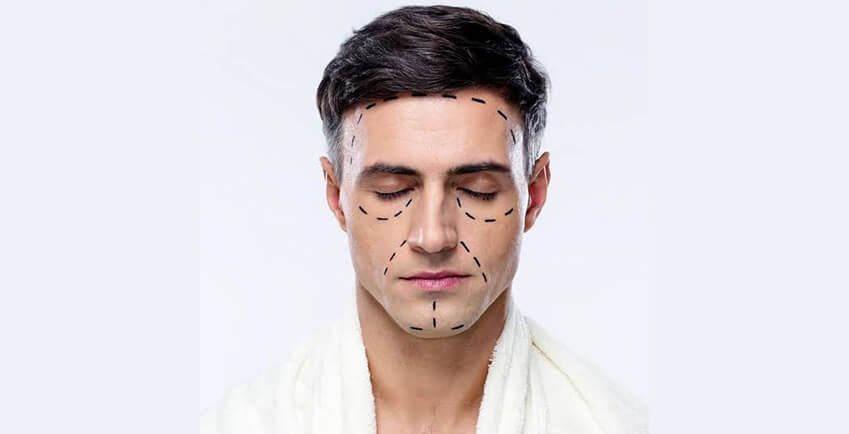
The days of the tough, rugged man who considered a bar of soap and a bucket of water the pinnacle of personal grooming are long gone. The modern man of the 21st century is a well groomed, polished and presentable man. He has a skin care routine and is not averse to upgrading himself. For years grooming and the concerns that come with ageing were not a matter “supposed” to bother men or even something to be talked about. Today, that understanding has shifted towards acceptance of self care being an important daily routine that fosters confidence and emotional wellbeing.
Today, men’s aesthetics has become an important and growing part of plastic surgery. From hair transplantation and gynecomastia correction to rhinoplasty, eyelid surgery, liposuction and facial rejuvenation, men are increasingly seeking procedures that help them look healthier, more confident and more in keeping with how they feel.
Social media, celebrity culture and evolving perceptions of masculinity have accelerated this shift. Professional and social expectations, alongside greater acceptance of cosmetic treatments, are helping reshape men’s attitudes towards aesthetic medicine.
And the numbers suggest that this is more than a cultural conversation.
According to the ISAPS Global Survey 2025, released in September 2026, men accounted for 14.4% of all surgical aesthetic procedures worldwide. For the first time, eyelid surgery was the most commonly performed surgical aesthetic procedure in both men and women. Among men, gynecomastia surgery ranked second and rhinoplasty third. These findings reflect the diversity of men’s aesthetic concerns, spanning facial rejuvenation, chest contouring and facial refinement.[1]
From Vanity to Self-Confidence
Perhaps the biggest change is the growing recognition that appearance can influence how people feel about themselves.
Men are increasingly incorporating skincare, haircare, grooming and aesthetic treatments into their personal routines. They want to look healthier, more refreshed and more confident.
The Camera Has Changed Everything
We live in an increasingly visual world. Video calls, social media, dating applications and professional networking platforms have made appearance more visible than ever before.
Repeated exposure to one’s own image can draw attention to features that might previously have gone unnoticed. For some men, this prompts an aesthetic consultation.
The desired outcome is often subtle: less prominent frown lines, reduced under-eye bags, a more defined jawline or a refreshed appearance.
The Appeal of Subtle Aesthetics
Minimally invasive treatments have helped make aesthetic medicine more approachable. Botulinum toxin, fillers, laser treatments and skin rejuvenation procedures offer options for men who want improvement without committing to surgery or prolonged recovery. The popularity of non-surgical treatments is also reflected in the American Society of Plastic Surgeons’ 2024 statistics, which document the substantial use of botulinum toxin and other minimally invasive aesthetic procedures. [2]
Male facial aesthetics requires particular attention to features like brow prominence, jaw definition, chin projection and facial proportions for a masculine appearance. Excessive correction can alter these characteristics, making individualised treatment planning essential.
Hair: More Than Just Hair
For many men, hair loss is one of the earliest and most emotionally significant aesthetic concerns. Male-pattern hair loss can begin in young adulthood and affect perceived age, confidence and self-image.
Hair transplantation has consequently become an important component of male aesthetics. Modern techniques require careful consideration of hairline design, donor availability, facial proportions, age and the likelihood of future hair loss.
The aim is not simply to restore hair, but to create a natural result that remains appropriate as the patient ages.
The Chest and the Pursuit of Definition
Fitness culture has also influenced men’s aesthetic choices. Even with regular exercise and a healthy lifestyle, some anatomical concerns cannot be corrected through exercise alone.
Gynecomastia is a particularly relevant example. Enlargement of the male breast can cause considerable embarrassment, leading some men to avoid swimming and fitted clothing. Surgical correction can address glandular tissue, excess fat or both, depending on the underlying anatomy.
Similarly, liposuction and body contouring can help selected patients address localised fat deposits that persist despite appropriate lifestyle measures. These procedures are not substitutes for weight management; their role is to improve contour and proportion.
For many patients, the benefit lies less in achieving an ideal physique than in resolving a long-standing source of self-consciousness.
The Workplace and the Dating World
Appearance can influence perceptions of energy, confidence and presentation. In competitive professional environments, some men seek aesthetic treatment because they feel their external appearance no longer reflects how energetic or capable they feel.
Dating applications and social media have further increased the visibility of appearance in social interactions.
Often, career confidence, dating and personal wellbeing are among the motivations that influence men to seek cosmetic treatments. [3] However, this cannot guarantee professional success or improved relationships. Its value should be considered in terms of an individual’s goals and expectations.
The Male Face Requires a Different Approach
Male aesthetic surgery is not simply female aesthetic surgery performed on a different patient.
Differences in brow position, forehead contour, nasal framework, chin projection, jaw definition, skin characteristics and patterns of ageing influence treatment planning.
Male rhinoplasty may aim to improve nasal proportions while preserving a strong dorsal profile. Blepharoplasty requires careful attention to brow position and orbital anatomy. Facial rejuvenation should address ageing without unnecessarily altering masculine characteristics. The surgeon’s task is not merely to correct a feature, but to understand which features define the patient’s face—and preserve them.
Why Are Men More Comfortable Seeking Treatment?
Several barriers are gradually disappearing:
- Reduced stigma: Greater visibility of male patients has made aesthetic treatments easier to discuss openly.
- Better information: Patients can research procedures, recovery, risks and expected outcomes before consultation.
- Natural-looking results: Refined techniques have increased the range of options for men seeking subtle improvements.
- Convenience: Some non-surgical treatments involve relatively little downtime, making them easier to accommodate around work and daily commitments.
- Greater accessibility: More clinics are addressing male-specific concerns and tailoring treatment plans to individual anatomy and goals.
Together, these changes have helped reposition aesthetic medicine as a personal choice rather than an activity incompatible with masculinity.
Acceptance Must Come With Responsibility
Greater acceptance should never mean that every aesthetic concern requires intervention. Appropriate patient selection, informed consent, realistic expectations and qualified practitioners are essential.
The consultation is therefore as important as the procedure itself. Surgeons must understand the patient’s motivations, assess whether the desired outcome is achievable and discuss alternatives, recovery and complications honestly. A responsible approach also means recognising when a procedure is unlikely to meet a patient’s expectations. The goal should never be to follow a trend or promise perfection.
A New Era of Men’s Aesthetics
The rise of men’s plastic surgery reflects a broader change in how men approach grooming, ageing, confidence and self-image.
Perhaps the real progress lies not just in men choosing plastic surgery, but in their ability to embrace personal transformation with confidence, free from the stigma that once made the choice difficult to acknowledge.
References
- International Society of Aesthetic Plastic Surgery (ISAPS). Global Survey 2025: Aesthetic/Cosmetic Procedures Performed in 2025. Released 29 September 2026
- American Society of Plastic Surgeons (ASPS). 2024 Plastic Surgery Statistics Report.
- Sunion Health. Why More Men Are Choosing Cosmetic Procedures. 5 December 2025.
Author: Dr. Rajshree Verma
Disclaimer: The opinions here are personal views of the authors. IAAPS is not responsible. All members may not have the same scientific view point