
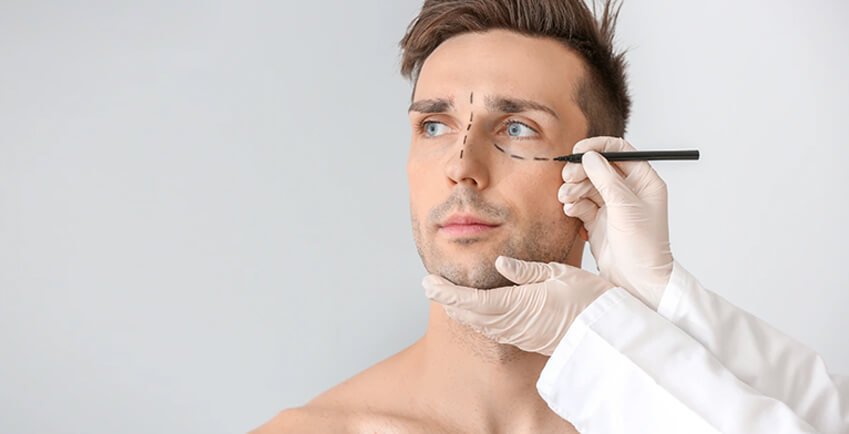
The Mirror Is Changing
Imagine a man standing before a mirror. He adjusts his collar, straightens his shoulders, and looks carefully at his reflection. Perhaps he notices a tired appearance around his eyes, a persistent fullness over his chest despite hours at the gym, a nose that has always made him self-conscious, or loose skin following significant weight loss.
For years, he may have dismissed these concerns with a familiar thought: “I am a man. I should learn to live with it.”
Today, that conversation is changing.
More men are openly exploring plastic surgery, not because masculinity has changed its definition, but because men are increasingly recognizing that looking after themselves includes their physical appearance, too. The mirror, once a silent witness to private insecurities, is becoming the starting point for informed decisions about personal well-being.
Plastic surgery is no longer a conversation restricted to women, celebrities, or the affluent. It is increasingly becoming part of a broader discussion about confidence, self-care, and the freedom to make choices about one’s own body.
- Breaking the Silence: When Confidence Becomes a Personal Choice
Society has traditionally given men a rather narrow definition of strength: be resilient, ignore discomfort, and never appear concerned about appearance. While physical strength and emotional resilience remain valuable qualities, why should caring about one’s appearance contradict either?
A man who chooses to correct a prominent ear, address enlarged male breasts, or improve the signs of facial ageing is not necessarily pursuing perfection. Often, he simply wishes to feel more comfortable in his own skin.
Consider a well-tailored suit. The tailor does not change the person wearing it; the suit is adjusted to fit the individual better. Similarly, aesthetic surgery, when appropriately planned, seeks to improve harmony between a person’s appearance and their expectations without erasing their individuality.
The important shift is not merely that more men are choosing procedures. It is that they are becoming more comfortable discussing their concerns without feeling that the decision requires justification.
Seeking aesthetic treatment is neither a weakness nor an obligation. It is a personal choice that deserves informed guidance, realistic expectations, and respect.
- What Are Men Actually Choosing?
Male aesthetic surgery is not a single procedure or a passing trend. It encompasses different concerns across different stages of life.
- Gynecomastia surgery: Enlarged male breasts can cause considerable embarrassment, affecting clothing choices, swimming, exercise, and social confidence. Appropriate surgery can address excess glandular tissue and fat after a proper clinical assessment.
- Hair restoration: Hair loss may alter facial framing and influence how a man perceives his age. Modern hair transplantation focuses on natural hairline design, donor-area preservation, and long-term planning rather than simply filling an empty area.
- Eyelid surgery and facial rejuvenation: Drooping eyelids, under-eye bags, and age-related changes may create a persistently tired appearance. Carefully selected procedures can help restore a fresher look while preserving natural facial character.
- Rhinoplasty: The nose occupies a central position in facial balance. Surgical refinement may address proportions and, in selected cases, functional concerns involving breathing.
- Liposuction and body contouring: For suitable patients, these procedures can improve localised fat deposits or contour irregularities that remain despite healthy lifestyle measures.
- Scar revision, ear correction, and chin or jawline procedures: These treatments can address longstanding concerns arising from anatomy, injury, or previous surgery.
These choices reflect a growing understanding that male aesthetics is not about making every man look alike. A strong, natural result respects masculine facial features, body proportions, age, ethnicity, and individual identity.
The objective is not to create a different person. It is to help the individual feel more at ease with the person he sees in the mirror.
- The Evidence Behind the Changing Trend
The change is not merely anecdotal. The International Society of Aesthetic Plastic Surgery (ISAPS), in its global survey covering procedures performed in 2024, reported approximately 2.81 million surgical aesthetic procedures among men worldwide. Eyelid surgery ranked first, followed by gynecomastia surgery and scar revision; liposuction and rhinoplasty were also among the leading procedures. ISAPS Global Survey 2024
These figures tell us something important: male aesthetic surgery extends far beyond the pursuit of a youthful face or a sculpted physique. It includes the correction of concerns that may have affected men for years.
Greater public awareness, easier access to reliable information, evolving workplace and social environments, and improved conversations between patients and surgeons have all contributed to the changing landscape.
Digital media has played a dual role. It has introduced people to treatment possibilities, but it has also created unrealistic expectations through filters, edited photographs, and exaggerated promises. The responsibility of the plastic surgeon is therefore not simply to offer a procedure, but to help patients distinguish between achievable improvement and digitally manufactured perfection.
- The Indian Advantage: Precision, Progress, and Professional Pride
India’s journey in plastic surgery deserves particular recognition.
Our specialty has evolved far beyond the limited public perception of cosmetic enhancement. Indian plastic surgeons work across reconstructive surgery, trauma, burns, congenital conditions, microsurgery, and increasingly sophisticated aesthetic procedures. This breadth of experience provides a valuable foundation for understanding anatomy, tissue behavior, healing, scars, and the restoration of form and function.
Male aesthetic surgery benefits directly from this foundation.
Whether planning a natural-looking hairline, preserving masculine characteristics during facial rejuvenation, correcting gynecomastia, or contouring the body after weight loss, successful outcomes require more than technical execution. They demand sound judgement, anatomical knowledge, artistic sensitivity, and an understanding of what makes each individual unique.
India’s medical ecosystem also offers access to advanced surgical instruments, improved anaesthesia and monitoring, refined operative techniques, and modern approaches to peri-operative care in appropriately equipped settings. Technology has expanded what surgeons can plan and achieve, while better patient education has strengthened the decision-making process.
Our progress should inspire pride, but also responsibility. The true measure of advancement is not how dramatically a surgeon can change an appearance; it is how safely, thoughtfully, and consistently that surgeon can deliver an appropriate result.
Indian aesthetic surgery has every reason to be ambitious about its future, provided innovation continues to be accompanied by scientific discipline, ethical practice, and patient safety.
- Is Plastic Surgery Safe? The Most Important Question
A positive conversation about plastic surgery must never become a fake promise of risk-free surgery.
Every surgical procedure carries potential complications. These may include bleeding, infection, scarring, asymmetry, anaesthesia-related complications, delayed healing, or the need for revision. The nature and likelihood of risks vary with the procedure, the patient’s health, and the circumstances in which treatment is performed.
Safety, therefore, is not a label attached to a procedure. It is a system built around the patient.
Think of a well-planned flight. The aircraft matters, but safety also depends on the pilot’s training, pre-flight checks, weather assessment, navigation, and emergency preparedness. In much the same way, safe aesthetic surgery depends on the surgeon’s qualifications and experience, careful patient selection, appropriate anaesthesia, an accredited or appropriately equipped facility, and reliable postoperative care.
A responsible consultation should include a medical history, relevant examination and investigations, discussion of alternatives, a realistic assessment of likely outcomes, and a clear explanation of risks. Patients should seek a suitably qualified plastic surgeon with recognised specialist training, verify credentials, and understand who will provide anaesthesia and follow-up care.
Not everyone who requests surgery is an appropriate candidate. Some concerns are better addressed through lifestyle measures or non-surgical treatment; others may require medical evaluation before aesthetic intervention. A surgeon’s willingness to advise against an unsuitable procedure is a sign of professional integrity, not a failure to provide a service.
When the right patient, the right procedure, the right surgical team, and the right setting come together, the aim is to make the benefits worthwhile while reducing avoidable risks. That is a more meaningful definition of safety than any guarantee of perfection.
- Beyond Appearance: The Psychology of Feeling Comfortable
Appearance is only one part of a person’s identity, yet it can influence how comfortably someone participates in everyday life.
A man embarrassed by gynecomastia may avoid changing in a gym. Someone troubled by a conspicuous scar may repeatedly feel the need to explain it. A patient with drooping eyelids may feel that his appearance communicates fatigue even when he feels energetic.
Addressing such concerns can improve satisfaction with appearance and, for some individuals, confidence in social situations. However, outcomes differ, and surgery cannot guarantee happiness, professional success, relationship satisfaction, or freedom from deeper psychological distress.
A thoughtful surgeon therefore listens before recommending. The consultation should explore what bothers the patient, why it matters, and what change he expects. If expectations are unrealistic, driven by external pressure, or associated with significant body-image distress, further discussion or psychological assessment may be appropriate.
The best outcome is not simply a technically successful operation. It is a well-informed patient whose expectations are realistic and whose decision reflects his own considered wishes.
- The New Definition of Masculinity
Perhaps the most encouraging development in male aesthetic surgery is not a new instrument, a refined technique, or a more precise treatment plan. It is the changing attitude towards self-care.
Masculinity does not need to be defended against the mirror. A man can value strength and still seek help for a concern that affects his confidence. He can accept natural ageing and still choose treatment. He can decide against surgery and deserve the same respect.
Plastic surgery should never become a new social obligation, nor should ordinary human features be presented as defects requiring correction. Its value lies in giving people a safe, ethical, and scientifically informed choice when a genuine concern warrants intervention.
The future of male aesthetic surgery is not about manufacturing perfection. It is about making informed choices possible.
Conclusion: A More Confident Conversation
The increasing acceptance of male plastic surgery reflects a broader cultural shift: men are beginning to speak more openly about concerns they once kept private.
India’s plastic surgeons are part of this transformation, combining clinical expertise, technical progress, and an increasingly patient-centred approach to aesthetic care. Our responsibility is to nurture that progress through education, ethical practice, scientific evidence, and uncompromising attention to safety.
Perhaps we should think of plastic surgery as a sculptor’s chisel. In untrained hands, it may remove too much; in experienced hands, guided by a clear understanding of the material, it can refine what is already there. The art is not in carving everyone into the same shape, but in recognising which changes are appropriate—and when to leave the original form untouched.
Ultimately, the goal is not to make every man look younger, sharper, or more handsome according to a passing trend. It is to ensure that any man considering aesthetic surgery can approach the decision without shame, proceed with sound medical guidance, and understand both its possibilities and its limitations.
Because confidence should never be imposed by society, but an informed choice to pursue it should always be respected.
Author: Dr Yash
Disclaimer: The opinions here are personal views of the authors. IAAPS is not responsible. All members may not have the same scientific view point