
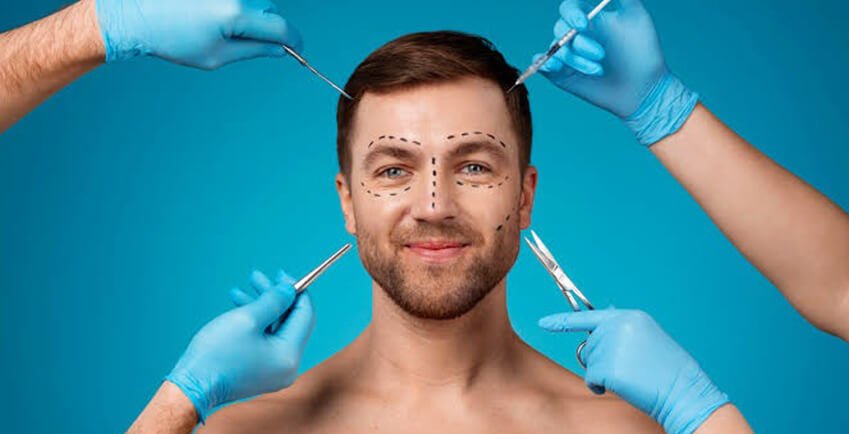
Because confidence has no gender—and neither does the desire to look good.
“Doctor, I go to the gym six days a week. I watch what I eat. But no matter how much I work out, my chest still looks like this. I avoid swimming pools because of it.”
He was a young professional in his early thirties. He wanted no dramatic transformation—just to wear a fitted T-shirt without feeling conscious of his chest.
A few consultations later, he underwent surgery for gynecomastia. At follow-up, he did not ask whether he looked more attractive. He said, “Now I can finally stop thinking about it.”
His story reflects a shift: men are discussing their appearance openly and exploring procedures once considered primarily for women.
What has changed? Are men becoming more conscious of beauty, or finally comfortable enough to admit that appearance matters to them, too?
Perhaps the real change is not that men want to look better. It is that they no longer feel compelled to pretend they don’t care.
The numbers behind the mirror
According to the International Society of Aesthetic Plastic Surgery (ISAPS) Global Survey 2025, men accounted for 14.4% of surgical aesthetic procedures and 15.2% of nonsurgical procedures worldwide. Eyelid surgery ranked first among surgical procedures for men, followed by gynecomastia surgery and rhinoplasty.
These figures highlight male aesthetics as an established part of modern plastic surgery. But statistics tell us what procedures are performed, not why individual men choose them.
Why should girls have all the fun?
For years, skincare and cosmetic surgery were largely marketed towards women. Men were expected to accept a receding hairline, age without complaint and treat concerns about appearance as vanity.
Then the culture shifted. The gym became a lifestyle, skincare became self-care, and men began discussing hair transplants as openly as fitness supplements. The question changed from “Is this masculine?” to “Does this work for me?”
And why shouldn’t it?
#MensGrooming now extends beyond haircuts and trimmed beards to skincare, hair restoration and, for some, aesthetic surgery. Greater acceptance has made it easier for men to seek advice without feeling they must justify caring about their appearance.
When the rules at home change, too
As more women build careers, earn independently and share financial responsibilities, the expectation of a man being the sole provider is gradually changing. This does not automatically give men more time or money, but evolving roles may create greater room for both partners to invest in their wellbeing.
Feminism challenges restrictive expectations of how men and women should behave. Greater gender equality may help men feel freer to explore choices once labelled feminine, including grooming and aesthetic treatment. This is a possible social influence, not a proven direct cause of increased male plastic surgery.
Perhaps equality means that women no longer have to apologise for wanting to look good—and men no longer have to pretend they don’t.
The male face is not simply a smaller version of the female face
Male aesthetic surgery requires attention to anatomy and individual goals. Brow position, jaw shape, chin projection, skin thickness and facial proportions all influence masculine features.
A man seeking eyelid surgery may simply want to look less tired; someone considering rhinoplasty may want better nasal balance without losing the character of his face. Good facial aesthetics means respecting the patient’s identity, not imposing a universal ideal.
The art of looking effortlessly yourself
Perhaps the finest compliment a man can receive after aesthetic surgery is not, “What have you had done?” but, “You look well. Have you been on holiday?”
A naturally restored hairline, a refreshed pair of eyes or a flatter chest may not announce itself as surgery. It simply allows a man to feel more comfortable in his own skin.
This is where surgical artistry matters most: knowing not only what to change, but what to preserve. The best result is not always the most dramatic one. Sometimes, it is the change that nobody notices—but the patient feels every day.
Hair today, confidence tomorrow?
Hair loss can make some men feel older than they are or change how they see themselves. Hair transplant can help appropriately selected patients, but success is not simply about creating the densest hairline.
Surgeons must consider donor hair, likely progression of androgenetic alopecia, age and long-term expectations. A natural, age-appropriate hairline may serve a patient better than one designed to recreate his teenage years. Depending on the cause and stage of hair loss, medical treatment may be more appropriate than surgery.
The gym cannot fix everything
Exercise and healthy habits matter, but they cannot correct every anatomical concern. Gynecomastia—the enlargement of male breast tissue—can cause embarrassment during swimming, exercise or intimate situations. Treatment depends on the cause and may address glandular tissue, excess fat or both.
Likewise, localised fat deposits or loose skin after substantial weight loss may persist despite exercise. Liposuction and selected body contouring procedures can help suitable patients, but they are not substitutes for weight management.
For a man who avoids swimming because of gynecomastia, surgery may offer more than a different physique: freedom from a persistent source of self-consciousness.
Looking good—or being told to look good?
Social media has made aesthetic treatments more visible, but it has also amplified filtered faces and idealised bodies. Men may feel pressure to have a defined jawline, thick hair, clear skin and sculpted physique. Danger is when self-care becomes another competition.
Plastic surgery should not become a requirement for dating, professional success or social acceptance. Surgeons must explore motivation, assess whether expectations are realistic, and explain risks, alternatives and limitations. When distress seems disproportionate to the physical concern, psychological assessment may be appropriate.
Sometimes the right recommendation is surgery. Sometimes it is medical treatment, reassurance or no intervention at all.
The measure of a good consultation is not how many procedures we offer, BUT how well we understand the person asking for one.
The goal is still to be yourself
Why are more men choosing plastic surgery? Changing social attitudes, greater awareness of treatment options and evolving ideas of masculinity have made aesthetic care easier to discuss. More men are willing to acknowledge concerns they may once have kept to themselves.
The man seeking a hair transplant, the father considering eyelid surgery and the young professional seeking gynecomastia correction may have different reasons for visiting a clinic. What they share is the need to be heard without judgement.
The future of aesthetics for men should not be about creating one ideal male appearance. It should be about offering safe, evidence-based options while respecting individual anatomy, identity and choice.
Confidence does not come in a surgical package, and masculinity cannot be measured by a jawline, a hairline or the contours of a chest.
Perhaps the most meaningful change is not that more men are choosing procedures. It is that more men feel comfortable asking questions, expressing concerns and making choices about their own bodies.
The goal is not to create a new man in the operating room. It is to help a man feel more comfortable being himself.
And that is where good plastic surgery begins.
Author: Dr Mansi Bansal
Department of Burns and Plastic Surgery
VMMC and Safdarjung Hospital
New Delhi
Email: mansi251295@gmail.com
Contact: 9958702211
Disclaimer: The opinions here are personal views of the authors. IAAPS is not responsible. All members may not have the same scientific view point