
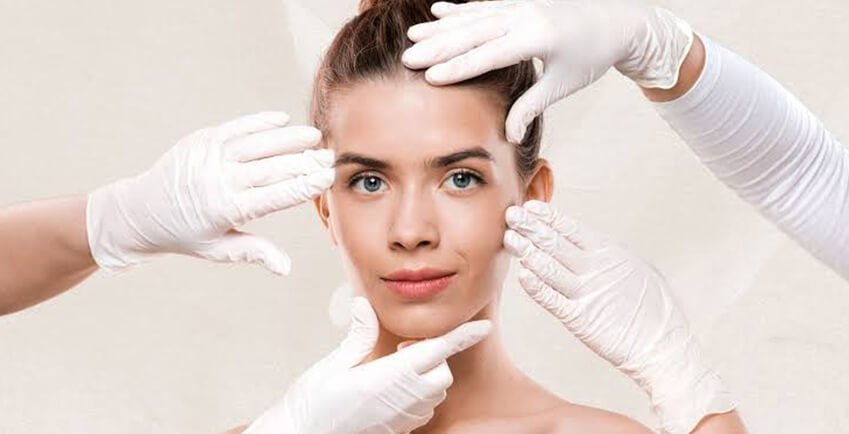
A woman looks into the mirror and wishes her nose were smaller. A young man scrolls through social media and wonders why his jawline does not look as sharp as the faces on his screen. A mother, years after pregnancy, is troubled by loose abdominal skin. An older patient feels that her face looks tired and wants to look fresher.
Their concerns are different, but they all lead to the same question:
How much change is enough?
A nose can be reshaped, a face can be lifted, fat can be removed, breasts can be reshaped and wrinkles can be softened. Modern aesthetic medicine can do remarkable things. But the real question is not whether we can do something. It is whether we should.
When the Mirror Is No Longer Real
Our idea of beauty has changed dramatically. Filters, editing applications and artificial intelligence can alter a face within seconds. Skin can be made perfectly smooth, the nose narrowed, the jaw sharpened and the eyes enlarged.
The filtered or AI image settles into their brain, which gradually makes them uncomfortable in their own skin and body, making them feel like an imposter while standing infront of the mirror.
The problem begins when people start comparing their real faces with digitally created images. Unrealistic expectations develop which gradually feel like their standard ideal face.
An AI-generated face does not show scars, swelling, healing, complications, ageing or the limits of human tissue. It may combine features that cannot realistically be achieved together. It creates the belief that every face should be symmetrical, every jawline sharp and every sign of ageing should disappear.
AI can be useful during consultation to explain anatomy or discuss possible changes. However, an edited image is not a surgical promise. A real result depends on bone structure, skin quality, facial proportions, healing and time.
The surgeon’s responsibility is to help the patient move from an unrealistic digital image to a realistic and healthy goal.
Enhancement Should Not Mean Erasing Identity
Aesthetic surgery is not one single type of treatment. For some patients, it means correcting a feature that has caused embarrassment since childhood. For others, it means restoring changes after pregnancy, major weight loss, injury or ageing.
A patient seeking rhinoplasty may want a nose that fits the face better, not a completely new nose. Someone considering eyelid surgery may want to look less tired, not lose the expressions that make the face familiar. A person undergoing a facelift may want to restore a youthful contour while still looking their age.
The same principle applies to body-contouring surgery. Liposuction can improve localised fat deposits, but it is not a replacement for weight loss. Abdominoplasty can remove excess skin and repair selected abdominal muscle problems, but it cannot promise a perfect body without scars or recovery. Breast surgery may improve comfort, proportion or confidence, but the “ideal” breast shape is not the same for every patient.
The goal should be improvement—not replacement.
A technically possible change may still be unsuitable for a particular face or body. Excessive reduction during rhinoplasty can affect breathing. Removing too much eyelid skin or fat can create functional problems or an unnatural hollow appearance. Repeated filler injections may gradually distort facial proportions. Removing too much fat during liposuction may create irregularities rather than a better contour.
In aesthetic surgery, more is not automatically better.
The Quiet Risk of “Small” Procedures
The rise of non-surgical treatments has made aesthetic enhancement appear easier and more casual. A patient may think, “It is only a little filler,” or “It is just a few units of botulinum toxin.”
But small procedures can have significant consequences.
Botulinum toxin can soften expression lines, but excessive treatment may create a frozen appearance. Fillers can restore volume, but repeated injections may cause swelling, migration, distortion and rarely, embolism.
The problem is often not one dramatic procedure. It is the gradual accumulation of changes—one treatment followed by another, and then another—until the face no longer looks natural.
Aesthetic medicine should not become a cycle in which every normal feature is treated as a defect.
What Is the Patient Really Seeking?
Before recommending any procedure, the surgeon must understand the reason behind the request.
Is the patient bothered by the feature for many years, or has the concern appeared suddenly after seeing a particular image online? Is the patient seeking comfort and confidence, or hoping surgery will solve problems in a relationship, workplace or social life? Does the patient understand the recovery, scars, risks and limitations?
These questions are not meant to judge the patient. They are meant to protect the patient.
A person who has lost a large amount of weight may benefit greatly from removal of excess skin. A woman with heavy breasts may experience relief after reduction surgery. Someone with prominent ears may feel more confident after correction. These are meaningful reasons for treatment because the expected benefit extends beyond appearance.
On the other hand, surgery may not help someone who believes that one more procedure will finally make them perfect. When dissatisfaction remains intense despite repeated treatment, body dysmorphic disorder or other appearance-related distress should be considered. Such patients need careful assessment and compassionate support rather than automatic surgery.
When Saying “No” Is Part of Good Care
Patients sometimes believe that the best surgeon is the one who agrees to every request. In reality, a good surgeon must also know when to say no.
A surgeon should reconsider treatment when the requested change is unsafe, when expectations are impossible, when the patient is being pressured by someone else, or when the likely benefit is too small to justify the risks.
Saying no does not mean dismissing the patient’s feelings. It means recognising that an operation may not provide the happiness the patient expects.
Consent is more than signing a form. It means understanding the benefits, risks, alternatives, recovery, scars and possibility of an imperfect result. It also means accepting that the final outcome may be different from a simulation or edited photograph.
So, Where Is the Line?
The line is drawn where further change begins to compromise safety, function, identity, expectations or emotional well-being.
It is drawn when a digitally edited image becomes the only acceptable outcome. It is drawn when a technically possible procedure is not aesthetically or functionally sensible. It is drawn when enhancement becomes an endless search for correction.
This does not mean that aesthetic surgery is unnecessary or superficial. It can restore confidence, improve comfort, correct deformity and help patients feel more at ease in their bodies. But it must be guided by judgement rather than trends, pressure or commercial promises.
The finest aesthetic surgeon is not the one who can change everything. It is the one who understands what should remain untouched.
Because beauty is not created by removing every imperfection. It is found in balance, individuality, confidence and the freedom to make informed choices.
Ultimately, the most important question is not:
“How much can we change?”
It is:
“How much change will truly make this patient’s life better?”
#wheredoyoudrawtheline #aestheticboundaries #beyondbeauty #beautywithoutexcess #enhancenotoverdo #naturallybeautiful #thinkbeforeyouenhance #aestheticsurgeryexplained
Author: Dr Mansi Bansal
Department of Burns and Plastic Surgery
VMMC and Safdarjung Hospital
New Delhi
Email: mansi251295@gmail.com
Contact: 9958702211
Disclaimer: The opinions here are personal views of the authors. IAAPS is not responsible. All members may not have the same scientific view point