
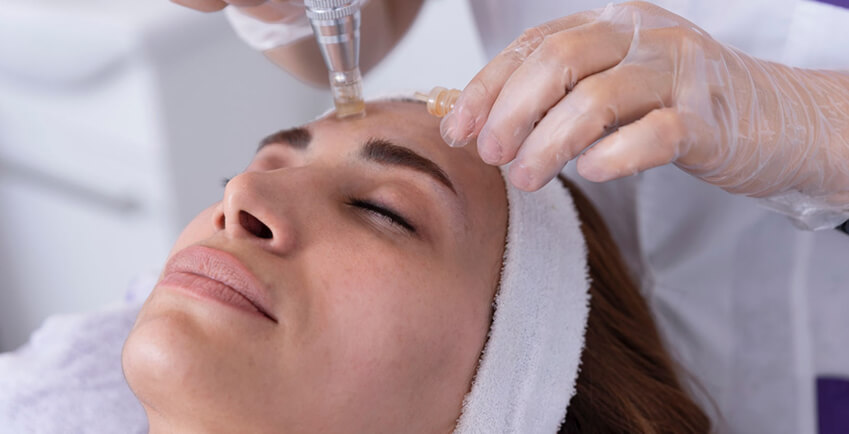
In recent years, the demand for minimally invasive and non-surgical facial rejuvenation procedures has increased tremendously. Patients today seek treatments that provide natural-looking results with minimal downtime while improving skin texture, tone, elasticity, and overall appearance. Among the most effective advances in aesthetic dermatology is the combination of chemical peels, microneedling, and PRP therapy for comprehensive skin rejuvenation. Modern aesthetic medicine is shifting from isolated procedures toward synergistic regenerative treatments that deliver natural, long-lasting rejuvenation with minimal downtime. Individually, each modality has proven efficacy in treating concerns such as acne scars, pigmentation, fine lines, uneven texture, enlarged pores, and early signs of aging. However, when strategically combined, these procedures work synergistically to enhance skin resurfacing, stimulate collagen production, and accelerate healing.
This article explores the science, benefits, indications, and practical applications of combination therapy using chemical peels, microneedling, and platelet-rich plasma (PRP) in facial rejuvenation.
Understanding the Components of Combination Therapy
Chemical Peels
Chemical peels are controlled chemical exfoliation procedures used for skin resurfacing and regeneration. They involve the application of acids such as glycolic acid, salicylic acid, lactic acid, mandelic acid, and trichloroacetic acid (TCA) to remove damaged skin layers and stimulate cellular turnover.
Superficial peels are commonly used in aesthetic practice for treating:
- Pigmentation disorders
- Acne and post-acne marks
- Dull skin
- Uneven skin texture
- Mild photoaging
Chemical peels improve skin radiance and facilitate better penetration of topical agents while initiating dermal remodeling.
Microneedling
Microneedling therapy, also known as collagen induction therapy or dermaroller therapy, is a minimally invasive procedure involving the use of fine needles to create controlled micro-injuries in the skin.
These microchannels trigger the body’s natural wound-healing cascade, leading to:
- Neocollagenesis
- Elastin production
- Dermal remodeling
Microneedling is highly effective for:
- Acne scar management
- Skin tightening
- Fine lines and wrinkles
- Enlarged pores
- Overall skin rejuvenation
Unlike ablative procedures, microneedling preserves the epidermis, making it safer for darker skin types and associated with shorter recovery time.
PRP Therapy
Platelet-rich plasma (PRP) therapy has emerged as a regenerative treatment in aesthetic medicine. PRP is prepared by centrifuging the patient’s own blood to concentrate platelets rich in growth factors such as:
- Platelet-derived growth factor (PDGF)
- Transforming growth factor-beta (TGF-β)
- Vascular endothelial growth factor (VEGF)
- Epidermal growth factor (EGF)
When applied topically after microneedling or injected into the skin, PRP accelerates tissue repair, enhances collagen synthesis, and improves skin healing.
PRP therapy contributes significantly to anti-aging treatment by improving skin texture, elasticity, hydration, and luminosity.
The Science Behind Combination Therapy
The rationale behind combining chemical peels, microneedling, and PRP lies in their complementary mechanisms of action.
Chemical peels exfoliate superficial damaged layers and enhance epidermal turnover. Microneedling stimulates collagen induction therapy and increases transdermal delivery, while PRP provides growth factors that optimize healing and tissue regeneration.
This multimodal approach addresses multiple levels of skin pathology simultaneously:
- Chemical Peels: Exfoliation and enhancement of skin resurfacing
- Microneedling: Dermal remodeling and collagen stimulation
- PRP Therapy: Regenerative healing and accelerated collagen synthesis
The result is enhanced skin rejuvenation with improved texture, firmness, pigmentation, and scar reduction.
Indications for Combination Therapy
- Acne Scar Management
Acne scarring remains one of the most common indications for combination therapy. Atrophic scars, especially rolling and boxcar scars, respond exceptionally well to microneedling with PRP.
Chemical peels further improve post-inflammatory hyperpigmentation and superficial irregularities. Clinical studies have demonstrated superior improvement in acne scars and skin texture when microneedling is combined with PRP compared to microneedling alone.
- Pigmentation Treatment
Melasma, post-inflammatory hyperpigmentation, and uneven skin tone are challenging conditions, particularly in darker skin types. Superficial chemical peels combined with controlled microneedling can improve pigment distribution while minimizing post-procedure complications.
PRP additionally enhances skin repair and reduces inflammation, contributing to brighter and healthier skin.
- Anti-Aging and Skin Rejuvenation
Aging skin undergoes progressive collagen loss, reduced elasticity, and dermal thinning. Combination therapy effectively targets these concerns through exfoliation, collagen stimulation, and regenerative healing.
Patients often experience:
- Reduction in fine lines
- Improved skin firmness
- Better hydration
- Enhanced glow
- Reduced pore size
This makes the procedure an ideal non-surgical facial rejuvenation option for individuals seeking subtle yet noticeable enhancement.
Procedure Protocol
Although protocols vary depending on skin type and indication, a typical session may involve the following steps:
Step 1: Skin Preparation
The skin is thoroughly cleansed and prepared. Priming agents may be prescribed before treatment, especially in patients prone to pigmentation.
Step 2: Chemical Peel Application
A superficial peel such as glycolic acid, salicylic acid, or mandelic acid is applied to exfoliate the epidermis and improve skin receptivity.
Step 3: Microneedling Procedure
After topical anesthesia, a dermaroller or microneedling device is used over the treatment area. Needle depth is selected according to the indication and anatomical site.
Step 4: PRP Application
Prepared PRP is applied topically during or immediately after microneedling, allowing deeper penetration through the microchannels.
Step 5: Post-Procedure Care
Patients are advised strict photoprotection, gentle skincare, hydration, and avoidance of irritants for several days.
Advantages of Combination Therapy
The growing popularity of this multimodal approach is due to several advantages:
- Enhanced clinical outcomes through synergistic action
- Minimal downtime compared to aggressive resurfacing procedures
- Safer for multiple skin types, including darker skin tones
- Natural-looking and gradual improvement
- Customizable according to patient concerns and downtime preferences
Potential Side Effects and Precautions
Despite being minimally invasive, proper patient selection and technique are essential.
Possible side effects include:
- Temporary erythema
- Mild edema
- Dryness or peeling
- Transient sensitivity
Contraindications may include active infections, keloidal tendency, uncontrolled acne, pregnancy, and certain dermatological disorders.
Strict aseptic precautions and sun protection are critical for optimal outcomes.
Future Perspectives
As regenerative aesthetics continues to evolve, combination therapies are becoming increasingly sophisticated. Advancements such as radiofrequency microneedling, exosome therapy, and growth factor-enhanced PRP are expected to further improve treatment outcomes.
Conclusion
Combination therapy using chemical peels, microneedling, and PRP represents a powerful and scientifically backed approach to facial rejuvenation. By integrating exfoliation, collagen induction therapy, and regenerative healing, this multimodal treatment effectively addresses acne scars, pigmentation, photoaging, and overall skin quality.
Its minimally invasive nature, versatility, and ability to deliver natural-looking results make it an increasingly preferred option in modern aesthetic practice. With careful patient selection, individualized treatment planning, and appropriate post-procedure care, combination therapy can significantly improve both skin appearance and patient confidence.
As patients increasingly seek effective yet minimally invasive solutions, combination therapy with chemical peels, microneedling, and PRP is redefining the future of non-surgical facial rejuvenation.
Author: Dr. Pallavi Phatak
Disclaimer : The opinions here are personal views of the authors. IAAPS is not responsible. All members may not have the same scientific view point