
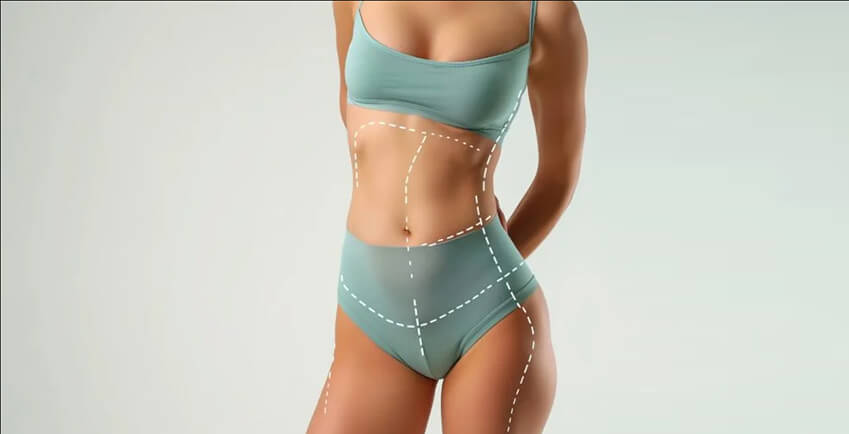
Body contouring procedures have evolved significantly over the past few decades, transitioning from simple fat removal techniques to sophisticated methods aimed at enhancing the natural anatomy of the human body. With increasing patient awareness and demand for athletic body aesthetics, contemporary aesthetic surgery focuses not only on reducing excess adipose tissue but also on creating harmonious contours that reflect natural muscular definition.
Lipo-sculpting represents a refined approach within modern aesthetic surgery that integrates surgical precision with detailed anatomical understanding. Techniques such as High Definition Liposuction (HDLipo) and Lipoetching allow surgeons to selectively remove fat to accentuate muscular landmarks, resulting in a more defined and proportionate physique. These developments have significantly expanded the scope of Body Contouring, positioning it as a key component of Advanced Aesthetics.
Evolution of Liposuction to Body Sculpting
Since its introduction in the late twentieth century, liposuction has become one of the most widely performed cosmetic surgical procedures worldwide. Early techniques primarily focused on debulking subcutaneous fat to improve body proportions. While effective for reducing localized adiposity, these procedures did not consistently address the aesthetic importance of underlying muscular anatomy.
The concept of Body Sculpting emerged as surgeons began to appreciate the role of surface anatomy in defining aesthetic contours. Rather than simply reducing fat volume, modern techniques aim to sculpt the body by emphasizing natural muscle borders and anatomical transitions.
This evolution ultimately led to the development of High Definition Liposuction, a technique designed to enhance muscular visibility by selectively targeting both deep and superficial fat compartments. By carefully manipulating these layers, surgeons can produce subtle light-and-shadow effects that mimic naturally athletic physiques.
Principles of High Definition Liposuction
High Definition Liposuction represents a more advanced form of liposuction that focuses on enhancing anatomical definition. Unlike conventional liposuction, which primarily removes fat from deeper layers, HDLipo involves controlled removal of superficial fat to highlight underlying muscular structures.
The procedure is based on several fundamental principles:
Three-dimensional anatomical planning
Detailed preoperative marking is performed to map muscular borders and anatomical landmarks. This planning stage is essential for achieving symmetrical and natural results.
Selective fat removal
Strategic removal of adipose tissue allows the surgeon to enhance muscular grooves while preserving surrounding fat to maintain smooth transitions.
Preservation of natural contours
Maintaining proportional fat distribution is critical to avoid exaggerated or artificial appearances.
Through these principles, HDLipo enables surgeons to create a Sculpted Body that appears anatomically natural rather than surgically exaggerated.
Lipoetching and Anatomical Definition
A key technique used in modern Precision Sculpting is Lipoetching, also referred to as abdominal etching when performed in the abdominal region. This approach involves selective removal of fat along muscular borders to enhance natural anatomical grooves.
The technique relies on the principle that muscle definition is perceived through contrast between convex and concave surfaces. By sculpting the superficial fat layer around muscular structures, surgeons can create subtle shadowing that emphasizes these contours.
Commonly targeted areas include:
- Rectus abdominis
- External obliques
- Serratus anterior
- Pectoral muscles
- Deltoid region
Among the various applications of HDLipo, Six Pack Surgery remains one of the most recognized procedures. The goal of this technique is to enhance the appearance of the rectus abdominis muscles by sculpting the surrounding fat layers.
The procedure typically involves:
- Detailed anatomical marking of muscle segments
- Controlled removal of fat around tendinous intersections
- Preservation of natural fat transitions to avoid sharp contour irregularities
- Creation of subtle depressions that simulate muscular grooves
Importantly, this technique does not create muscles artificially; rather, it reveals the underlying muscular anatomy by reducing the fat that obscures it. As such, ideal candidates typically have relatively low body fat and good skin elasticity.
Technological Advances in Body Contouring
The success of modern Body Sculpting techniques has been supported by several technological innovations that improve surgical precision and tissue preservation.
Ultrasound-Assisted Liposuction (VASER)
Ultrasound-based technologies utilize acoustic energy to disrupt adipose tissue through cavitation. This process separates fat cells from surrounding connective tissue, allowing them to be removed more easily while preserving nerves and vascular structures.
Power-Assisted Liposuction
Power-assisted systems use mechanically vibrating cannulas that facilitate controlled fat removal. These devices enhance surgical accuracy and reduce operator fatigue during complex sculpting procedures.
Laser-Assisted Lipolysis
Laser-based technologies may stimulate collagen production and mild skin tightening following fat removal, which can improve postoperative contour quality in selected patients.
Together, these technologies enable surgeons to perform Precision Sculpting with improved efficiency and safety.
The Role of Light and Shadow in Aesthetic Contouring
One of the distinguishing aspects of Advanced Aesthetics is the emphasis on how light interacts with body surfaces. Muscular contours naturally create peaks and depressions that reflect light differently, contributing to the visual perception of definition.
High-definition Body Contouring enhances these natural patterns by creating carefully planned areas of prominence and depression. The result is a three-dimensional contour that accentuates muscular structure while maintaining anatomical harmony.
This artistic component highlights the dual nature of aesthetic surgery, which combines scientific knowledge with sculptural precision.
Advanced Aesthetics
The field of Advanced Aesthetics continues to progress as surgical techniques and technologies evolve. Emerging innovations include:
- Combination procedures integrating fat grafting for enhanced muscular projection
- Improved energy-based skin tightening technologies
- Three-dimensional digital surgical planning
- Less invasive contouring methods with faster recovery times
Patient Selection and Safety
Careful patient selection remains a critical factor in achieving successful outcomes in HDLipo and Body Sculpting procedures.
Ideal candidates generally demonstrate:
- Localized fat deposits resistant to lifestyle modification
- Stable body weight
- Good skin elasticity
- Realistic expectations regarding outcomes
These procedures are best suited for body contour enhancement rather than weight reduction.
From a safety perspective, surgeons must adhere to established guidelines regarding aspirate volumes, operative time, and postoperative monitoring. When performed by experienced surgeons following appropriate protocols, complication rates remain low and patient satisfaction rates are high.
Conclusion
Modern Lipo-sculpting has transformed liposuction into a highly specialized form of anatomical contouring. Techniques such as High Definition Liposuction, Lipoetching, and Six Pack Surgery allow surgeons to enhance natural muscular structures and create a refined Sculpted Body.
Successful outcomes depend on precise anatomical understanding, careful surgical planning, and meticulous technique. As innovations continue to advance the field of Body Contouring, these procedures will remain central to contemporary aesthetic surgery, enabling surgeons to deliver natural and individualized results.
Author- Dr Nikita Chaudhary
Disclaimer : The opinions here are personal views of the authors. IAAPS is not responsible. All members may not have the same scientific view point