
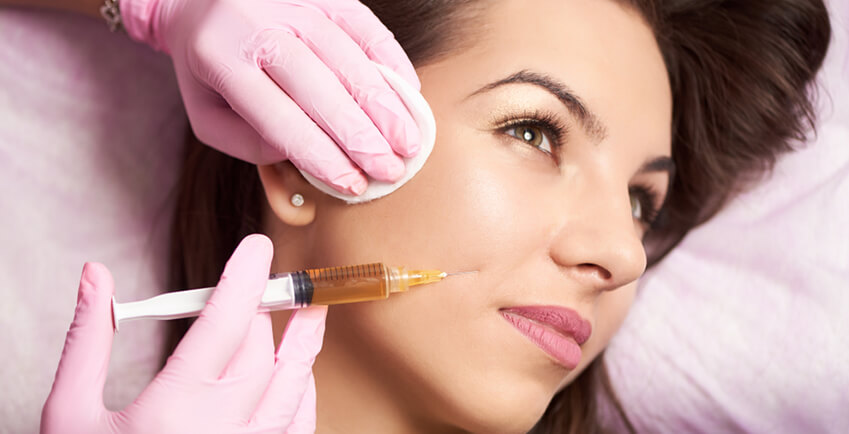
The demand for minimally invasive cosmetic procedures has surged over the past decade, with dermal fillers ranking among the most popular interventions worldwide.
Dermal fillers have become a cornerstone in aesthetic medicine, offering minimally invasive solutions for soft tissue augmentation, wrinkle correction, and volume restoration. Among these, Hyaluronic acid (HA) fillers, in particular, have a favourable safety profile and widespread acceptance with predictable outcomes. However, overall concerns regarding the safety of dermal fillers, especially in delicate areas such as the under eyes and lips, persist among patients and clinicians alike. Concerns are driven by potential complications such as infection, granuloma formation, and unintended aesthetic outcomes.
So, let us try to understand “how safe dermal fillers are”, focusing on critical anatomical areas and evidence-based best practices.
Safe and Stunning: The Science Behind Filler Safety
The safety and efficacy of dermal fillers depend on filler composition, injection technique, and anatomical site. Their widespread adoption is further supported by ease of administration and immediate aesthetic results. However, complications, ranging in severity and onset, underscore the necessity for stringent protocols and skilled technique. Proper patient selection and adherence to safety protocols remain essential. Ideal fillers have appropriate rheological properties, allowing smooth tissue integration and minimizing lumpiness or discolouration.
The American Society for Dermatologic Surgery states that all injectable fillers may be associated with common injection site reactions such as erythema, transient swelling, minor bruising, and tenderness, which generally resolve within a few days to 2 weeks. Rare but serious adverse events include vascular occlusion leading to skin necrosis or blindness, inflammatory events, and nodule or granuloma formation. These risks highlight the importance of robust risk mitigation strategies.
So, when used by experienced practitioners, they are generally well-tolerated. Standard safety protocols recommended by major professional societies include aseptic technique, appropriate product selection, and the availability of hyaluronidase for emergency reversal.
What Makes Hyaluronic Acid Fillers the Go-To Choice for Safe Aesthetic Enhancements?
The introduction of HA fillers brought significant advancements in the safety and efficacy of fillers due to their biocompatibility, low immunogenicity, and reversibility with hyaluronidase. Multiple studies report similar safety profiles across HA products, with selection tailored to specific patient needs and anatomical considerations. When performed with proper technique and patient selection, the complication rate remains low, with most adverse events being minor and transient.
Common side effects include injection site erythema, swelling, and bruising, which typically resolve within days to weeks. More rare complications, such as granuloma formation or infection, are generally manageable with appropriate clinical techniques and interventions.
Importantly, long-term use does not appear to result in cumulative harm when treatments adhere to best practices.
Advancements in HA filler formulations have further improved safety and clinical outcomes. Newer products with higher rheological properties, such as increased G’ values, offer improved structural lift and longevity in areas requiring volumetric support, contributing to more predictable aesthetic results. A comprehensive understanding of both product characteristics and patient-specific anatomical features is essential to achieve optimal outcomes while minimising the risk of complications.
Under-Eye Fillers: Where Precision Meets Delicacy
The periorbital area, particularly the tear trough, is one of the most anatomically challenging sites for filler placement due to thin skin and proximity to vascular structures. The vascular anatomy of this region makes it vulnerable to vascular compromise, potentially resulting in ecchymosis or, in severe cases, skin necrosis. Careful technique and appropriate filler selection are crucial to minimize complications. HA fillers are commonly used in the periorbital region due to their safety profile and reversibility, but careful technique is necessary to avoid complications such as the Tyndall effect and vascular occlusion. Common complications include:
- Bruising and swelling, typically mild and
- Tyndall effect, a bluish discolouration from superficial
- Nodule or lump formation, often from excessive volume or improper filler
Serious complications, though rare, include vascular occlusion, causing tissue necrosis or vision loss.
SAFETY TIPS:
Recommended safety measures include the use of blunt cannulas, conservative volume deposition, and thorough patient assessment of tear trough anatomy. Evidence supports that under-eye fillers are safe when performed by trained professionals, with most complications being mild and reversible.
Lip Fillers: Achieving Balance Safely
Lip augmentation with HA fillers remains one of the most commonly performed aesthetic procedures. Common side effects include localized swelling, ecchymosis, tenderness, and minor asymmetry, which are typically mild and resolve within days. Serious risks, though rare, include vascular compromise from accidental intravascular injection of the superior or inferior labial arteries, potentially leading to tissue necrosis if not promptly managed.
Best practices for safety in lip augmentation include:
- Use of HA fillers with appropriate rheological properties suited for lip
- Strict sterile
- Detailed knowledge of lip vascular anatomy and slow, small-volume
- Ready access to hyaluronidase for emergency
Clinical studies demonstrate that lip fillers, when properly performed, have a high safety profile, with adverse events being rare and self-limiting.
Consensus and Best Practices: Safety with Expertise
The safety of dermal fillers depends not on the fillers themselves but on injection technique, product quality, and patient factors. Unqualified injectors and counterfeit products pose significant risks, potentially resulting in unpredictable outcomes or chronic nodules.
Proper patient screening, detailed understanding of facial anatomy, and strict adherence to evidence-based protocols are paramount. The Global Aesthetics Consensus recommends patient assessment, appropriate product selection, and adherence to safety protocols to ensure successful outcomes. Studies show most complications arise from inappropriate patient selection, issues of sterility, incorrect placement, excessive volume, and poor injection technique. When performed by trained and experienced practitioners, HA fillers are generally well-tolerated and intrinsically harmless.
Takeaways
Clinicians should continue to follow best practice guidelines and maintain informed patient consent to ensure optimal outcomes.
Special attention is warranted in delicate areas such as the tear trough and lips, where thin skin and close vascular proximity increase complication risks.
Overall, when properly administered, HA fillers represent a reliable, reversible, and effective tool in aesthetic practice, providing satisfactory results with a low complication profile.
In the right hands, with the right fillers, beauty has never been safer!
Author: Dr P Umar Farooq Baba, SKIMS, Srinagar
Phone: +91 9419081397
IAAPS No: 2023/JK/05
Email: drumar397@gmail.com
Disclaimer : The opinions here are personal views of the authors. IAAPS is not responsible. All members may not have the same scientific view point