
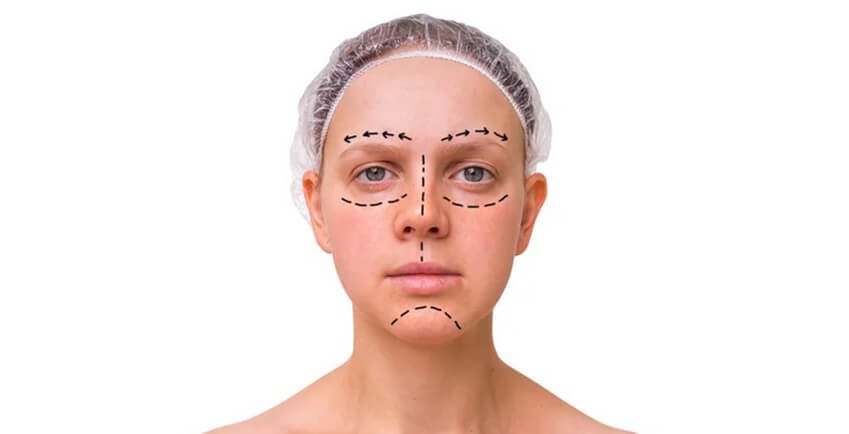
The patient wants more.
The surgeon knows how to do more.
The procedure is technically possible.
The consent form is signed.
So why not?
Because just because we can do something does not always mean we should.
We practise in an era of extraordinary possibility. Faces can be refined, contours restored, breasts reshaped, scars revised and the visible effects of ageing softened. With every advance in technique and technology, the range of what we can offer expands.
But possibility brings responsibility.
Aesthetic surgery, at its best, can restore confidence, correct disproportion and help people feel more comfortable in their own skin. The question is not whether transformation is good or bad.
The harder question is: when does enhancement stop enhancing?
And perhaps the answer lies in recognising that the line is not drawn in one place.
The First Line Is Drawn by Science
Before beauty, there is biology. Before desire, there is anatomy.
Skin has limits. Blood supply has limits. Tissue availability has limits. Healing has limits. Previous surgery changes anatomy, creates scars and narrows the margin of safety for whatever comes next.
Science does not negotiate.
A patient may want a tighter result, a smaller nose, another revision or further correction. The surgeon may have the skill to attempt it. But every intervention has consequences, and every additional procedure comes at a biological cost.
This does not mean extensive surgery is inherently excessive. Some patients appropriately undergo staged procedures, multiple operations or dramatic transformations.
The question is not simply, “How much surgery is too much?”
The better question is: What will it cost to go further and is what we gain worth what we risk?
That is where the first boundary lies: not in an arbitrary number of procedures, but in respect for anatomy, safety and function.
The Second Line Is Drawn by Reality
A procedure can be safe, technically feasible and still be the wrong procedure for that patient.
Aesthetic surgery can alter a feature, restore proportion and rejuvenate appearance. It cannot promise a perfect life, guarantee happiness or stop the passage of time.
And while looking better may strengthen confidence, surgery cannot solve every insecurity that enters the consultation room.
So perhaps we need to ask more than, “What would you like to change?”
Sometimes the more important question is: “Why?”
There is nothing wrong with wanting enhancement. But the meaning attached to a procedure matters.
Is the patient seeking improvement or pursuing an ever-receding idea of perfection?
In the age of filters, edited images and rapidly changing beauty trends, reality itself can become a moving target. One patient brings a photograph. Another returns after an excellent result, convinced that one more procedure will finally make everything “right.” A third finds a new flaw each time the previous one is corrected.
At some point, the problem being pursued may no longer be anatomical.
That is a line we must learn to recognise.
When “More” Begins to Mean “Less”
There is a point at which more stops being better.
A little volume may restore what time has softened. Too much can overwhelm the face.
Refinement can create harmony until a face begins to lose the individuality that made it distinctive.
Tightening can refresh until natural movement and function are compromised.
And repeated procedures can begin as legitimate corrections before quietly becoming a chase for a perfection that does not exist.
The difficult part is that excess cannot always be measured in millilitres, millimetres or the number of operations.
Sometimes the most useful question is simply:
Has this intervention added harmony or taken something away?
A technically “imperfect” feature may be central to someone’s identity. Character, expression and individuality should not become casualties in the pursuit of a trend.
Restraint is not a lack of skill. Sometimes, it is the highest expression of it.
The Final Line Is Drawn by the Surgeon
And then comes the boundary that no scan, measurement or consent form can draw: judgment.
There is one question every aesthetic surgeon should carry into the consultation room and the operating theatre:
Why am I doing this?
Ask it even when the patient is enthusiastic.
Even when the procedure is technically possible.
Even when it appears safe.
Why am I saying yes?
Is this genuinely likely to benefit the patient? Are the goals realistic? Does the anticipated gain justify the risk?
Or am I proceeding because saying no is difficult? Because another surgeon may do it anyway? Because technical ability has quietly become a substitute for clinical judgment?
A patient’s desire matters.
But desire is not always an indication.
This is not an argument against autonomy. Patients have the right to make informed decisions about their bodies. But autonomy does not absolve the surgeon of responsibility.
A surgeon is not simply a pair of hands attached to a consent form.
Sometimes the right answer is a procedure. Sometimes it is a different procedure. Sometimes it is more time, more discussion or a second opinion.
And sometimes, the most responsible answer is no.
Not from arrogance. Not from a desire to control.
But from the same place as every good surgical decision: a commitment to the patient’s best interests.
Because the ability to perform a procedure is not the same as having a reason to perform it.
So, Where Do You Draw the Line?
There is no universal definition of “enough.” No single measurement defines excess. A dramatic transformation may be entirely appropriate for one patient, while a seemingly minor additional intervention may not be appropriate for another.
The line is contextual.
But perhaps the hierarchy is simple.
First: where science says you must.
Respect anatomy, physiology, vascularity, healing, function and safety.
Then: where expectations depart from reality.
Be honest about what surgery can reasonably achieve—and what it cannot.
Finally: where your professional conscience demands it.
Keep asking: Why am I doing this?
The future of aesthetic surgery will give us more—more techniques, more technology and more ways to alter the human form.
That makes restraint more important, not less.
Perhaps the highest form of aesthetic judgment is not knowing how far we can go.
It is knowing how far we should.
And having the courage to stop.
Author: Dr. Pallavi Phatak
Disclaimer: The opinions here are personal views of the authors. IAAPS is not responsible. All members may not have the same scientific view point