
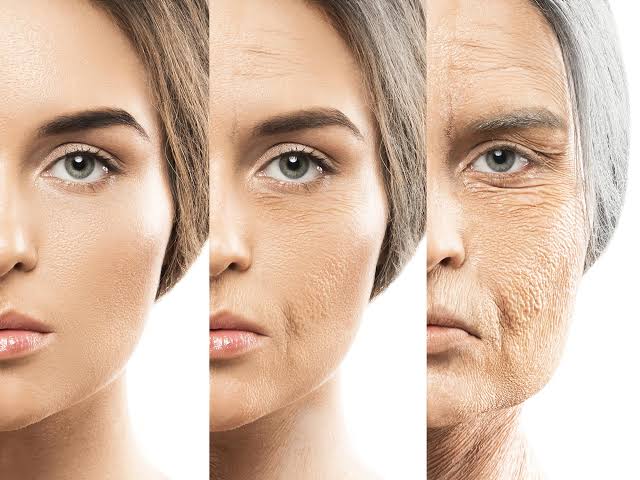
Walk into any busy aesthetic clinic in India today and you will notice something. The patient in the chair is not getting one procedure. She is getting a chemical peel today, microneedling next month, PRP layered on top of the microneedling, and another peel six weeks later. To someone outside the field, it can look like the clinic is selling more than the patient needs. It is not. There is a real biological reason combination therapy works better than any single treatment, and once you see it, the logic of modern non-surgical facial rejuvenation falls into place.
Here is the simplest way to explain it.
Skin ages on multiple floors of the same building
Think of skin as a four-storey building.
The top floor, the stratum corneum, is what you see in the mirror. When it becomes dull, rough or uneven, the whole face looks tired.
One floor below, at the dermo-epidermal junction, lives pigmentation. Melasma, post-acne marks, sun spots: they all sit at this depth.
Below that, in the papillary dermis, sit fine lines, broken capillaries and the early signs of ageing.
And on the ground floor, the reticular dermis, sits the heavy structural work. Atrophic scars, deep wrinkles, laxity. This is where collagen lives, and collapses.
A chemical peel works mostly on the top two floors. Microneedling reaches the bottom two. PRP, a concentrate of your own growth factors, does not reach anywhere on its own. But it tells whichever layer is healing to heal harder.
Now ask yourself the obvious question. If a problem exists on all four floors of the building, can one treatment that reaches only two of them ever be enough?
That is the entire argument for combination therapy in one paragraph.
Chemical peels: still the workhorse
Glycolic acid, salicylic acid, mandelic acid, Jessner’s solution, TCA. These are the agents that have been doing skin resurfacing the longest, and they are not going anywhere. The principle is simple: deliver a controlled chemical injury to the epidermis, and the skin sheds, turns over and rebuilds smoother. Over a few sessions, melanocytes calm down, pigmentation lightens, and surface texture improves.
For Indian skin (Fitzpatrick IV through VI), there is one rule every honest aesthetic surgeon will tell you: respect the melanocyte. The single biggest mistake in pigmentation treatment in our patients is going too strong, too fast. Mandelic and salicylic acids, gentler than glycolic, are usually the better starting point in darker skin. TCA has its place, but only in the right hands.
What peels will not fix on their own? Deep atrophic acne scars. That is microneedling territory.
Microneedling: the original collagen factory
Whether the device is a humble dermaroller or a motorised pen, the principle has not changed. Hundreds of micro-channels are made in the skin. The body, sensing a wound, mounts the classical healing response. Fibroblasts move in, lay down type III collagen, and over the next three to six months remodel it into stronger, more organised type I collagen.
This process, and the name attached to it, is why we call microneedling therapy collagen induction therapy. For atrophic and rolling scars, it is one of the most reliable tools we have for acne scar management. It is also one of the safer options in pigmented skin, because unlike ablative laser, it does not strip away the surface.
But microneedling has a ceiling. Once you have activated the wound-healing response, can you push it to do more?
PRP: turning up the volume
This is where PRP therapy earns its place. Platelet-rich plasma is the patient’s own growth factors, drawn from their blood and concentrated. PDGF, TGF-beta, VEGF, EGF, IGF-1: a cocktail that tells fibroblasts to migrate faster and produce more collagen.
Apply PRP topically on its own and, broadly, the literature says not much happens. The stratum corneum keeps it out. But apply PRP immediately after microneedling, when the skin has thousands of fresh channels through which the molecules can reach already-activated fibroblasts, and the response amplifies.
A senior aesthetic surgeon I observed put it in one line that I have never forgotten. “PRP without microneedling is just expensive serum sitting on top of dead skin.” Once you understand that sentence, the combination protocol makes complete sense.
Why three procedures beat one procedure done well
Stack the logic.
A chemical peel resets the surface and addresses pigmentation. A few weeks later, microneedling activates the dermis. PRP at the time of microneedling delivers growth factor signals exactly where, and exactly when, the skin is ready to use them. Maintenance peels keep the surface in good order. The protocol respects the four to six weeks the dermis needs to remodel between treatments. No part of the protocol is doing the same job as another.
This is the rhythm that most aesthetic surgeons in India are now using for skin rejuvenation, and it has become the default approach for acne scar management, pigmentation treatment, and overall non-surgical facial rejuvenation in younger and middle-aged patients.
Who this is not for
A good aesthetic surgeon will tell you who should not have this protocol, and that list matters as much as the indications.
Active inflammatory acne: peels yes, microneedling no, until the inflammation has settled.
Patients on aspirin, clopidogrel or other blood thinners: PRP yields drop, and bruising goes up.
History of cold sores around the mouth: prophylactic acyclovir before any mid-face work, every time.
Keloid history, active vitiligo, immunosuppression: think twice.
And for V–VI skin, the rule is the same as everywhere else in aesthetic medicine. Never push intensity to compensate for a slow response. Add a session. Lower the depth. Pick the gentler peel. The patients who do best in the long run are not the ones whose surgeons pushed hardest. They are the ones whose surgeons knew when to back off.
A small honest note
I am a plastic surgery resident at a central government institute. These procedures are not part of our daily list. What I have written here is what I have learnt from observerships, from conferences, from sitting in with seniors generous enough to teach me, and from the literature. I have not yet done these procedures with my own hands. But the logic of combination therapy is not the kind of thing you have to perform to understand. You only have to watch it work, in clinic after clinic, in case after case, until the pattern becomes impossible to miss.
The bottom line
The single most useful thing to understand about modern anti-aging treatment is that the era of the miracle procedure is over. Younger skin does not owe its appearance to one big event. It owes it to constant, low-level cellular renewal. The job of combination therapy is to imitate that, gradually and in layers, respecting the fact that skin is not a flat canvas but a four-storey building, and each storey needs its own attention.
That is why a chemical peel, microneedling, and PRP work better together than any of them could alone. Three tools. One face. The whole greater than its parts.
Author: Dr Talvir
Disclaimer : The opinions here are personal views of the authors. IAAPS is not responsible. All members may not have the same scientific view point