
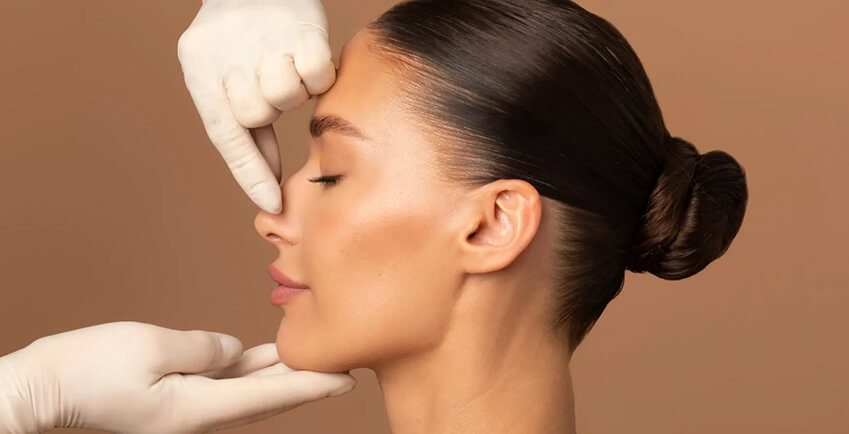
The nose is the central feature of the face. Because of its prominence, even minor changes to its structure can have a profound impact on overall facial harmony and self-confidence. It is no surprise, then, that the nose job , medically known as rhinoplasty remains one of the most sought after procedures in aesthetic plastic surgery.
However, despite its popularity, misconceptions abound. In the era of filtered social media selfies and celebrity transformations, patients often walk into a clinic with a specific “wish pic” and an expectation of instant perfection. As surgeons and aesthetic specialists, it is our duty to bridge the gap between expectation and reality. Rhinoplasty is a powerful tool, but it is not a magic wand. Understanding the distinct capabilities and limitations of this complex surgery is the first step toward a successful outcome.
To make an informed decision, we must explore exactly what modern rhinoplasty can achieve, the technologies driving these results, and the biological realities that draw the line on what is possible.
What Rhinoplasty CAN Do: Enhancing Form and Function
The primary goal of rhinoplasty is balance. It is rarely about creating a “perfect” nose in isolation, but rather creating a nose that fits perfectly with the patient’s unique facial features.
- Correcting Structural and Aesthetic Imbalances
Cosmetic rhinoplasty is highly effective at altering the size, shape, and angle of the nose. It can smooth out a dorsal hump, refine a bulbous tip, narrow a wide bridge, or adjust the nostril size. For many patients, the goal is subtle refinement, a nose that looks like it has always belonged to them.
Modern techniques have evolved significantly. We are seeing a shift toward preservation rhinoplasty, a philosophy that prioritizes keeping the original structural integrity of the nose intact. Instead of removing large amounts of cartilage and bone, surgeons preserve the natural ligaments and dorsal lines, pushing structures down rather than cutting them away. This approach often leads to more natural looking results and structurally sound noses that age better over time.
- Restoring Breath and Function
A nose cannot just look good; it must work well. Functional rhinoplasty addresses the physiological aspects of the nose. Many patients seeking cosmetic changes also suffer from a deviated septum, enlarged turbinates, or valve collapse that restricts breathing.
Often, a septoplasty (surgery to straighten the septum) is performed simultaneously with aesthetic changes. This dual approach ensures that the patient leaves the operating table not only with a more balanced profile but also with a significantly improved airway. It is a win-win scenario where form meets function.
- Honouring Heritage with Ethnic Rhinoplasty
One of the most important advancements in our field is the rise of ethnic rhinoplasty. In the past, rhinoplasty often aimed for a “standardized” Western nose, which frequently looked disharmonious on faces of African, Asian, or Middle Eastern descent.
Today, the goal is to refine features without erasing heritage. Whether it involves augmenting a flat bridge, refining a thick tip, or narrowing the alar base, ethnic rhinoplasty respects the patient’s cultural identity. It creates facial harmony that acknowledges the patient’s background rather than overwriting it.
The Technological Edge: How We Achieve These Results
The “how” of rhinoplasty has changed just as much as the “what.” The days of “hammer and chisel” roughness are largely behind us, replaced by precision technology.
The Rise of Ultrasonic Rhinoplasty
One of the most revolutionary tools in the modern surgeon’s arsenal is the piezo ultrasonic device. This technology powers ultrasonic rhinoplasty. Instead of using manual rasps and osteotomes to break the nasal bones, the piezo device uses high speed ultrasonic vibrations to sculpt the bone.
The beauty of the piezo device is its selectivity; it cuts hard tissue (bone) but leaves soft tissue (blood vessels, nerves, and cartilage) unharmed. This precision results in significantly less bruising, less swelling, and a faster recovery for the patient. It allows surgeons to reshape the nasal pyramid with millimeter level accuracy, which is particularly beneficial for reducing wide bridges or removing humps without destabilizing the nose.
Surgical Approaches: Closed vs. Open
Surgeons also choose between different access points. Closed rhinoplasty involves incisions made entirely inside the nostrils. This means there is no visible external scarring. It is an excellent choice for straightforward bridge reductions or minor tip work. However, for complex structural work or major reconstruction, an open approach (with a tiny incision across the columella) is often necessary to give the surgeon full visibility.
The Non-Surgical Alternative
Not everyone is ready for the operating room. For those seeking minor tweaks without downtime, non surgical rhinoplasty often called liquid rhinoplasty has become a popular interim solution.
Using dermal fillers, a skilled injector can camouflage a dorsal hump, lift a drooping tip, or add height to a flat bridge. It is an “illusion” rather than a reduction; you are adding volume to create straight lines. While it cannot make a nose smaller, it can make it appear straighter and more symmetrical. However, patients must understand that these results are temporary, lasting 6 to 18 months, and carry their own risks, such as vascular compromise, if not performed by an expert.
What Rhinoplasty CAN’T Do: The Reality Check
Despite these incredible advancements, rhinoplasty has hard limits. Managing these expectations is crucial for patient satisfaction.
- It Cannot Give You Someone Else’s Nose
Patients often bring photos of celebrities and say, “I want this nose.” While these photos are helpful for understanding aesthetic preferences, rhinoplasty cannot simply “copy and paste” a feature. Your skin thickness, cartilage strength, and bone structure dictate the outcome.
For example, a patient with thick, sebaceous skin may never achieve a razor sharp, defined tip, regardless of
the surgeon’s skill. Thick skin acts like a heavy blanket, obscuring the delicate cartilage work underneath. Conversely, patients with paper thin skin run the risk of showing every minor irregularity. A surgeon can modify the framework, but they cannot change the fundamental fabric of the patient’s tissues.
- It Cannot Solve Emotional Dysmorphia
Rhinoplasty can improve confidence, but it cannot fix a life in turmoil or cure Body Dysmorphic Disorder (BDD). If a patient believes that fixing their nose will save a failing marriage, get them a promotion, or completely overhaul their popularity, they will likely be disappointed. The surgery changes the nose, not the person’s entire existence.
- It Cannot Guarantee Perfection
Rhinoplasty is widely considered the most difficult of all cosmetic surgeries. It involves moving parts, healing forces, and scar tissue formation that are sometimes unpredictable. Even in the most experienced hands, minor asymmetries can occur.
This brings us to revision rhinoplasty. While we always aim for “one and done,” statistics show that a percentage of rhinoplasty patients will seek secondary procedures to tweak the result. Revision cases are exponentially more complex due to the presence of scar tissue and the lack of structural cartilage (often requiring grafts from the rib or ear). While revision
surgery can correct deformities and improve function, it is always more challenging than the primary surgery. Therefore, it is critical to understand that while rhinoplasty can strive for improvement, demanding absolute geometric perfection is a recipe for dissatisfaction.
Conclusion
Rhinoplasty is a journey of millimeters. It is a sophisticated interplay of functional rhinoplasty and aesthetic art, utilizing tools like the piezo ultrasonic device and techniques like preservation rhinoplasty to deliver results that were impossible a few decades ago.
Whether a patient opts for a temporary liquid rhinoplasty or a permanent surgical transformation, the key to success lies in realistic expectations.
Rhinoplasty can create balance, improve breathing, and enhance self-image. It can refine features to respect ethnic heritage. But it cannot defy the laws of biology or solve internal psychological struggles.
For anyone considering this procedure, the advice is simple: choose a qualified surgeon who understands both the anatomy and the aesthetics, listen to their assessment of your anatomy, and focus on progress, not perfection. When expectations meet reality, the results can indeed be life-changing.
Dr Varun Lokesh
DrNB Plastic surgery resident
Shija Hospitals and Research Institutes Imphal, Manipur
Disclaimer : The opinions here are personal views of the authors. IAAPS is not responsible. All members may not have the same scientific view point