
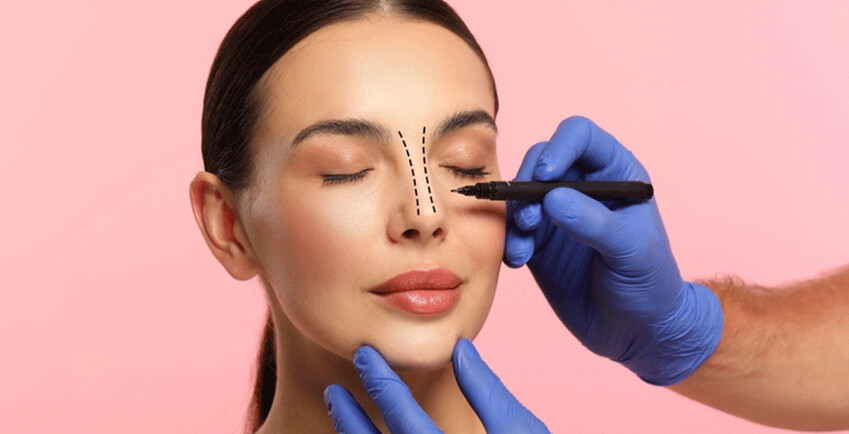
Rhinoplasty, commonly referred as a nose job, is one of the most frequently performed but technically demanding procedures in plastic surgery. The nose plays a central role in facial appearance and is also essential for normal breathing. For this reason, rhinoplasty is unique as it combines aesthetic, functional, and reconstructive goals in a single operation.
Despite widespread awareness of rhinoplasty, many patients approach surgery with unrealistic expectations. Some believe surgery will give them a “perfect” nose or complete facial symmetry.These high expectations can lead to disappointment even when surgery is technically successful. Modern rhinoplasty therefore places strong emphasis on patient education, realistic goal setting, and respect for individual nasal anatomy.
Over the past few decades, rhinoplasty techniques have evolved significantly. Earlier methods focused mainly on reducing nasal size, often at the cost of long-term support and function. Contemporary rhinoplasty prioritises preservation of normal anatomy, strengthening of nasal structures, and subtle refinement. Understanding the true capabilities and limitations of rhinoplasty is essential for both surgeons and patients.
Evolution of Modern Rhinoplasty
Traditional rhinoplasty techniques often involved aggressive removal of bone and cartilage to achieve cosmetic goals. While these approaches could create dramatic changes, they frequently resulted in long-term complications such as nasal collapse, breathing difficulty, and unnatural appearance. As experience grew, surgeons recognised the importance of maintaining structural support.
Modern rhinoplasty has shifted toward preservation-based techniques. The aim is not to completely reshape the nose, but to improve its form while maintaining stability and function. Each nose is planned individually, in account to facial proportions, skin quality, ethnic background, and patient expectations.
Surgical Approaches: An Overview
-Open rhinoplasty involves a small incision at the columella, allowing the surgeon full exposure of nasal structures. This approach is particularly useful in complex deformities, post-traumatic cases, congenital abnormalities, and revision surgeries. It provides excellent visibility and precision.
-Closed rhinoplasty is performed through incisions inside the nostrils. As there is no external scar, it is often preferred for minor to moderate changes. Tissue disruption is less, and recovery may be faster, although surgical exposure is limited.
Advanced Techniques in Contemporary Practice
- Non-surgical rhinoplasty also known as Liquid Rhinoplasty uses dermal fillers to camouflage minor irregularities such as depressions or mild asymmetry. While results are temporary, this option may be suitable for selected patients who do not want surgery. Botox may be used to relax nasal muscles and refine movement.
- Preservation rhinoplasty maintains the natural nasal dorsum by repositioning it rather than removing it. Techniques such as push-down or let-down manoeuvres help achieve a smooth profile with a natural appearance.
- Endoscopic-assisted rhinoplasty allows targeted correction with minimal tissue trauma.
- Ultrasonic or piezo rhinoplasty uses piezo ultrasonic device that utilises ultrasonic high-frequency vibrations to precisely sculpt the bone and cartilage, reducing damage to surrounding soft tissues and improving postoperative recovery.
How Technology Is Improving Rhinoplasty Outcomes ?
Three-dimensional imaging has become an important tool in rhinoplasty planning. It helps patients visualise possible outcomes and improves communication between surgeon and patient.
Computer-aided design allows creation of customised grafts, while Artificial Intelligence may assist in analysing facial proportions and planning surgery. However, technology supports but does not replace surgical judgement.
What Rhinoplasty Can Achieve?
The primary aesthetic goal of rhinoplasty is to improve facial harmony. The nose should blend naturally with other facial features rather than attract attention.Cosmetic Rhinoplasty can effectively smooth dorsal humps, straighten a deviated nose, refine the nasal tip, reduce excessive width, and improve nostril symmetry.
Although perfect symmetry does not exist, rhinoplasty can significantly reduce noticeable asymmetries caused by trauma, uneven growth, or congenital differences. Improvements can be made in bridge alignment, tip projection, and nostril balance.
Functional improvement is an important aspect of rhinoplasty. Many patients suffer from breathing difficulty due to septal deviation, nasal valve collapse, or structural obstruction. Functional rhinoplasty addresses these problems and can significantly improve quality of life. When cosmetic and functional correction are combined, the procedure is known as Septorhinoplasty..
Rhinoplasty also plays a major role in reconstructive surgery. Nasal trauma can cause both aesthetic deformity and airway compromise. Surgery can reposition fractured bones, reconstruct damaged cartilage, restore symmetry, and improve airflow. Congenital deformities such as cleft-related nasal abnormalities can also be corrected using rhinoplasty principles.
Revision rhinoplasty is indicated in patients who are dissatisfied after previous surgery. Causes include residual deformity, over-resection, under-correction, or breathing problems. Revision procedures are more complex and require careful planning.
Limitations of Rhinoplasty
Rhinoplasty cannot create a perfect or ideal nose. Surgical outcomes are limited by skin thickness, cartilage strength, bone structure, existing asymmetry, and individual healing response. Surgery can improve appearance but cannot override biological limits.
Rhinoplasty cannot completely change genetic or ethnic features. Modern ethical practice focuses on preserving identity. Ethnic rhinoplasty aims to enhance appearance while respecting natural characteristics, especially in Indian and Asian noses.
The procedure does not improve skin quality. Conditions such as acne, pigmentation, large pores, or skin laxity are not corrected by rhinoplasty. Patients with thick skin may have less visible tip definition despite good structural correction.
Severe breathing problems may not be resolved by cosmetic surgery alone. Additional procedures such as septoplasty or turbinate reduction may be required and should be planned beforehand.
Rhinoplasty does not alter other facial features such as the chin or jaw. In some cases, chin deficiency contributes to the appearance of a large nose, and chin augmentation both surgical or non surgical may provide better balance than excessive nasal reduction.
Psychological limitations are important to recognise. Rhinoplasty may improve confidence, but it cannot cure low self-esteem, resolve personal relationships, or guarantee happiness. Patients seeking emotional validation are at higher risk of dissatisfaction.
Healing after rhinoplasty varies widely. Swelling, scar formation, and skin contraction differ among individuals. Final results, particularly of the nasal tip, may take 12 to 18 months to become apparent. No surgeon can guarantee an exact outcome.
Rhinoplasty in the Spotlight: Lessons from Celebrities Transformations
Celebrities aesthetic changes strongly influence modern perceptions of beauty. When they undergo subtle nasal refinements, they often help to normalise the cosmetic procedures and encourage open conversations about aesthetic surgery.The growing preference for balanced, natural-looking outcomes has played a key role in reducing stigma and increasing public acceptance of rhinoplasty.
Many celebrities have embraced subtle enhancements while maintaining their unique features.As these transformations become more visible, general public also feel motivated to explore their own aesthetic goals. Ultimately, these high-profile examples reflect a shift in beauty ideals ,one that values facial harmony, individuality, and thoughtful enhancement over perfection.
Key Takeaways
Rhinoplasty is a powerful procedure that combines art and science. When performed using modern techniques and guided by realistic expectations, it can enhance facial harmony, improve breathing, and restore nasal structure with durable results. However, it is not a solution for perfection or emotional transformation. The true success of rhinoplasty lies in subtle refinement that respects anatomy, function, and individuality.
Author
Dr. Bhumika Narang
MCh (Plastic & Reconstructive Surgery)
Consultant Plastic Surgeon, Faridabad
Member – IAAPS
Disclaimer : The opinions here are personal views of the authors. IAAPS is not responsible. All members may not have the same scientific view point